

THANK YOU FOR SUBSCRIBING

Pharma Tech Outlook Weekly Brief
Be first to read the latest tech news, Industry Leader's Insights, and CIO interviews of medium and large enterprises exclusively from Pharma Tech Outlook
A featured contribution from Leadership Perspectives: a curated forum reserved for leaders nominated by our subscribers and vetted by our Pharma Tech Outlook APAC Advisory Board.


Based on my 25 years of experience working in research ethics and clinical trial oversight, I foresee the next five to 10 years as being one of the most innovative and impactful times for research.
Just within the last decade,immunotherapy has gone from pre-clinical pipedreams to radically transforming what researchers and clinicians envision is even possible. We now have the ability to manipulatea patient’s own immune system to attack cancer cells without poisons or radiation, and instead, their own immune cells doing what they were designed to do,with a little help from science.
My team at Advarra has the privilege of seeing the latest emerging research involving the most cutting edge of therapies. We see immunotherapy intersecting with gene editing to potentially cure previously incurable conditions and as researchers continue to explore the potential of immunotherapy, we’re starting to see innovative applications beyond just the oncology field.
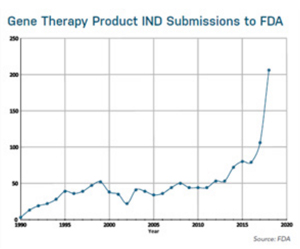
According to statistics published by the U.S. Food and Drug Administration (FDA), the number of Investigational New Drug applications involving gene therapy has grown exponentially since 2015, and those early phase projects will be hitting the clinic in the next 10 years. What an amazing time to see innovative therapies, like immunotherapies, developed to where they are making a direct and impactful difference in human health. These innovations don’t come without challenges, but with some proactive collaboration and preparation, we’ll be able to bring many more new immunotherapies and other breakthroughs to patients very soon.
Challenges of Immunotherapy Manufacturing
To be certain, moving to personalized, “N-of-1” therapies will be hard for our industry. Manufacturing a genetically engineered, customized product for a specific patient is much more difficult than producing pills in a bottle at a central manufacturing plant.
"We see immunotherapy intersecting with gene editing to potentially cure previously incurable conditions and as researchers continue to explore the potential of immunotherapy, we’re starting to see innovative applications beyond just the oncology field"
However, many companies are working diligently to solve manufacturing challenges though mobile production facilities and selfcontained labs. In such settings, a technician can program the parameters of the patient’s condition, cell type, genetic markers, and other information, and the robots can then produce an engineered immunotherapy product specific to that patient.
Imagine one of those bespoke biomanufacturing labs in every hospital,standing ready to produce an N-of-1 therapy exactly when the patient needs it. I believe we will have that capability, or close to it, within the next 10 years.
Many Possible Applications for Immunotherapy
It’s good that the technology is on its way, because hundreds of new biopharmaceutical companies are entering the clinical development phase with innovative ways to use immunotherapy in disease conditions beyond oncology. This could mean potential cures for certain types of diabetes, heart disease, Parkinson’s disease, Alzheimer’s disease, and many other conditions.
 Consider diabetes – we already have well established standards of care for the condition, but what if we were able to eliminate those standard therapies altogether? Clinical researchers are actively exploring how to use a type of immunotherapy called beta cell regeneration therapy, which aims to protect and/or regenerate the remaining insulinproducing cells in the body. This therapy would have a dramatic and meaningful impact for those suffering from type 1 diabetes.
Another line of immunotherapy research is studying how to alter the immune system itself to prevent the body from attacking the insulin-producing cells in the first place, a potential cure for diabetes that would eliminate the need for ongoing treatment of the condition.
What Can Your Organization Do to Prepare?
My team at Advarra continues to support amazing researchers in academia and biopharma in advancing these novel therapies through clinical development stage and into the clinic.
Is your organization ready for what is coming next?
• New manufacturing systems will need to be developed and installed.
• Distribution systems built around genetically engineered biologics designed specifically for one patient will take the place of mass-produced pill bottles.
• Bench research labs will need advanced gene editing tools and biochemists looking at cells rather than small molecule chemical compositions.
• Medical professionals will need to be trained and understand how these new immunotherapies work and when to prescribe them.
• And most importantly, patients with debilitating conditions will expect these therapies to be available to them when they need it and at a location which is convenient for them.
It is indeed an exciting time to be involved in the clinical research field!
